Hill Heat's 2024 Election Debrief: The Climate Consequences
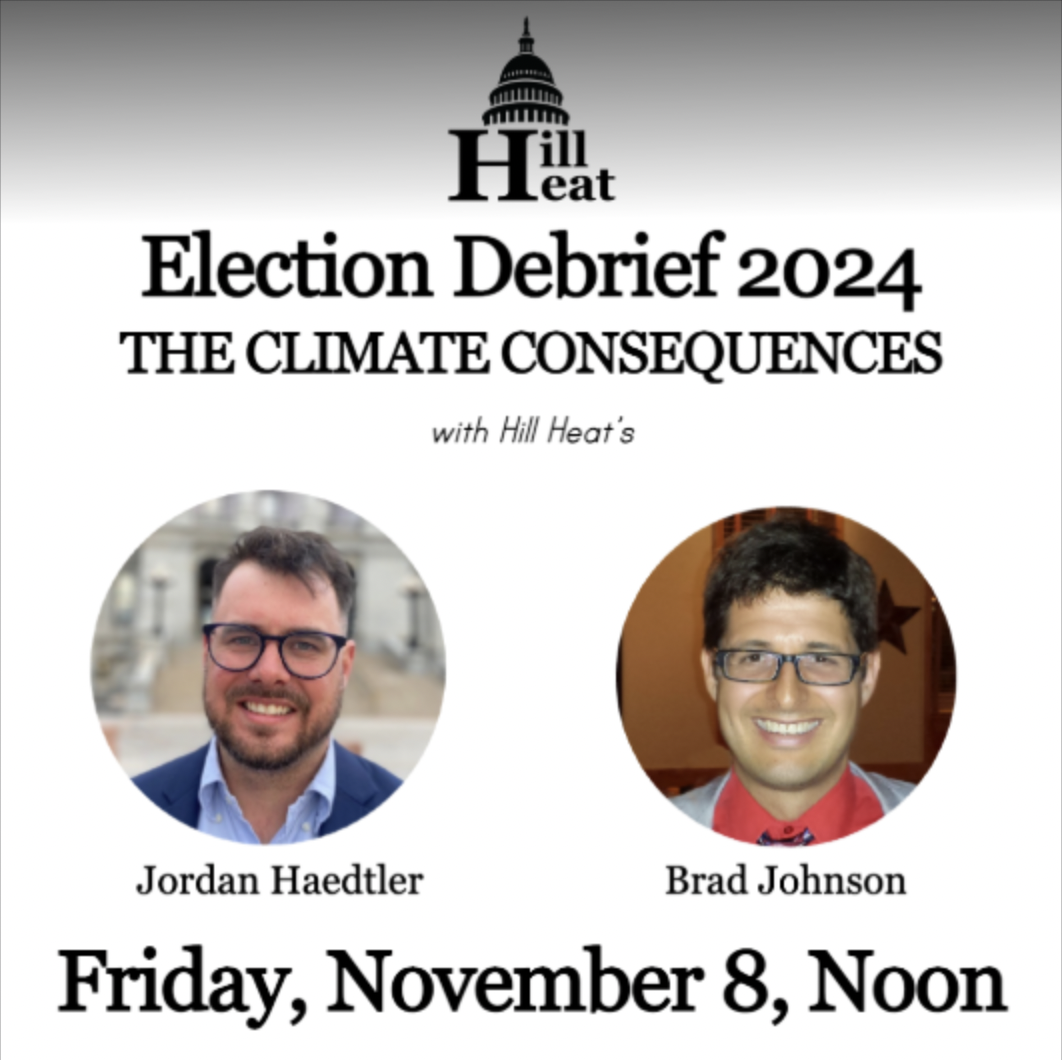
Hill Heat’s editors Brad Johnson and Jordan Haedtler are hosting a post-election debrief on Friday, November 8, 2024 at noon Eastern Time.
As the dust settles on the 2024 election, they will review the outcomes of key climate races and ballot measures up and down the ballot, with a first look at prospects for climate hawks and clean energy champions.
After registering, you will receive a confirmation email containing information about joining the presentation.
Post-Election Mass Call: Making Meaning of the Moment

Donald Trump will be returning to the White House in 2025. It’s up to us to build the movement that will fight for each other over the next four years.
Join with members of 200+ progressive organizations as we move quickly to “Make Meaning of the Moment,” lay out concrete actions people can take this week, and share thoughts on the path forward.
Because there’s so much that’s worth fighting for.
Speakers:- Maurice Mitchell, Working Families Party
- Rep. Pramila Jayapal, chair of the Congressional Progressive Caucus
- Leah Greenberg, co-founder, Indivisible
- Rahna Epting, executive director, Move On
- Ash Lee Henderson, co-executive director, Highlander Center
Climate on the Ballot: Post-Election Analysis 2024
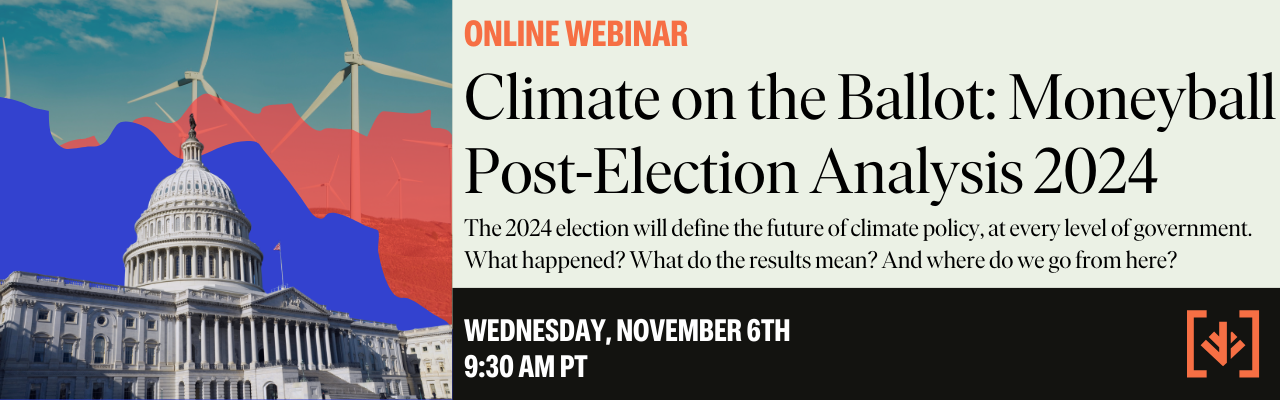
The 2024 election will define the future of climate policy, at every level of government. What happened? What do the results mean? And where do we go from here?
Join Climate Cabinet November 6th, at 9:30 AM PT / 12:30 PM ET as our data scientists and political experts analyze the outcomes and discuss their implications for the critical positions shaping our climate future.
The stakes are high in several pivotal states. In Arizona, a pro-climate government could address extreme heat and water shortages for the first time. Michigan and Minnesota’s elections will determine if the upper Midwest continues its clean energy progress or reverts to fossil fuels. Pennsylvania has the chance to shift from fossil fuel dependence to clean energy leadership. In North Carolina, candidates like Natasha Marcus advocate for policies that protect families from climate-related disasters. These pivotal races will shape the future of our climate policy, making our webinar essential to understand what’s next.
Green New Deal Happy Hour
Come join us at our next Green New Deal Happy Hour this Thursday at Sonny’s Pizza at 7PM with our dear friends at Lead Locally – it is going to be popping and we will be celebrating the importance of uplifting local GND candidates!
Sonny’s Pizza
3120 Georgia Ave NW
Calls for Climate: Josh Riley for NY-9

Join us to turn voters out this election to defeat Trump and elect climate champions!
The stakes in this election couldn’t be higher. That’s why we’re supporting Kamala Harris and Congressional candidates in key races across the country who will stand up for corporate polluters and put people before profits.
Join us on Tuesdays to call voters in key congressional districts and make sure they have a plan to get out and vote for climate champions.
At 6pm ET, we’ll be joined by Josh Riley to hear his plan to fight for climate action once elected. Hear directly from Josh about his priorities then make calls to voters to them out for him!
We’ll be making calls to support these climate champions:- Josh Riley for NY-19 at 6pm ET / 3pm PT
- Kirsten Engel for AZ-06 at 8pm ET / 5pm PT
Both of these races can help Democrats take back the House. Josh and Kirsten are running in battleground districts currently held by Republicans. Join us to call voters and flip these seats.
This event is cohosted by Climate Hawks Vote, Center for Biological Diversity Action Fund, Friends of the Earth Action, and Third Act.
See the schedule for the rest of the month.
It All Depends on Water: Examining Efforts to Improve and Protect Central Oregon’s Water Supply
On Tuesday, October 8, 2024, at 10:00 a.m. (PDT), the Committee on Natural Resources, Subcommittee on Water, Wildlife and Fisheries will hold an oversight field hearing titled “It All Depends on Water: Examining Efforts to Improve and Protect Central Oregon’s Water Supply.” The hearing will examine the importance of collaboration in the Deschutes Basin and its impact on agriculture and species recovery. This hearing will be held at the Deschutes County Fairgrounds, 3800 SW Airport Way in Redmond, Oregon.
Pro-Palestinian Protests on National Park Service Lands
On Thursday, September 26, 2024, at 2:00 p.m., in room 1324 Longworth House Office Building, the Committee on Natural Resources, Subcommittee on Oversight and Investigations will hold an oversight hearing titled “Desecrating Old Glory: Investigating How the Pro-Hamas Protests Turned National Park Service Land into a Violent Disgrace.”
Legislative Hearing on Federal Lands Amplified Security for the Homeland (FLASH) Act
On Thursday, September 26, 2024, at 10:15 a.m., in room 1334 Longworth House Office Building, the Subcommittee on Federal Lands will hold a legislative hearing on the following bill:
- H.R. 9678 (Rep. Juan Ciscomani, R-Ariz.), “Federal Lands Amplified Security for the Homeland (FLASH) Act”.
- Construct roads on federal lands for increased access and patrols by law enforcement and Border Patrol officers
- Ensure access for law enforcement agencies to federal land along the border
- Allow states to place temporary barriers on federal lands to secure the border
- Direct federal lands managers to develop policies and procedures to reduce the trash buildup caused by illegal immigration
- Mitigate wildfires caused by immigration and restart a Trump administration initiative to manage hazardous fuels along the southern border
- Prohibit the housing of illegal migrants on federal lands
- Eliminate cultivation of illegal cannabis on federal lands
Examining Puerto Rico’s Electrical Grid and the Need for Reliable and Resilient Energy
On Thursday, September 26, 2024, at 10:00 a.m., in room 1324 Longworth House Office Building, the Subcommittee on Indian and Insular Affairs will hold an oversight hearing titled “Examining Puerto Rico’s Electrical Grid and the Need for Reliable and Resilient Energy.”
Witnesses:- Manuel Laboy Rivera, Executive Director, Central Office for Recovery, Reconstruction, and Resiliency
- Antonio Torres Miranda, Associate Commissioner, Puerto Rico Energy Bureau
- Juan Saca, Chief Executive Officer, LUMA Energy
- Brannen McElmurray, Chief Executive Officer, Genera PR LLC
Examining the Public Health Impacts of PFAS Exposures
Subcommittee hearing.
Witnesses:- Laurel Schaider, Ph.D., Senior Scientist, Environmental Chemistry and Engineering, Silent Spring Institute
- Sue Fenton, Ph.D., Director of the Center for Human Health and the Environment, Professor of Biological Sciences, North Carolina State University
- Michael D. Larrañaga, Ph.D., P.E., President and Managing Principal R.E.M. Risk Consultants